
What is EMG?
EMG (Electromyography) is a diagnostic medical test used to evaluate the electrical activity of muscles and the nerves that control them. It helps doctors determine whether symptoms such as muscle weakness, pain, numbness, or tingling are caused by muscle disorders, nerve damage, or problems in nerve-to-muscle communication.
What does an EMG diagnose?
An EMG (Electromyography) helps doctors find out whether muscle weakness, pain, numbness, or tingling is due to a problem in the nerves or the muscles.
It can help diagnose:
- Nerve damage or compression (like carpal tunnel)
- Muscle diseases
- Pinched nerves in the neck or back
Indications
- Indications for Indications for EMG (Electromyography)
EMG (Electromyography) is indicated when a doctor needs detailed information about the function of muscles, peripheral nerves, nerve roots, and nerve–muscle connections. It helps determine the cause, location, and severity of neuromuscular problems.
- Muscle-Related Indications
EMG is advised in patients with:
- Unexplained muscle weakness
- Muscle wasting (atrophy)
- Muscle pain or cramps
- Muscle stiffness
- Muscle twitching (fasciculations)
Suspected primary muscle diseases (myopathies) such as:
- Muscular dystrophy
- Inflammatory myopathies
- Metabolic muscle disorders
- Nerve-Related Indications
EMG helps evaluate:
- Peripheral neuropathy (e.g., diabetic neuropathy)
- Nerve injuries due to trauma or surgery
- Entrapment neuropathies, including:
- Carpal tunnel syndrome
- Ulnar nerve entrapment
- Peroneal nerve palsy
- Numbness, tingling, or burning sensations
- Loss of sensation or motor function
- Spine and Nerve Root Disorders
EMG is indicated for:
- Radiculopathy (pinched nerve in neck or lower back)
- Neck pain or back pain radiating to arms or legs
- Suspected disc herniation
- Spinal nerve compression
- Neuromuscular Junction Disorders
EMG is useful in suspected cases of:
- Myasthenia gravis
- Lambert–Eaton myasthenic syndrome
- Other disorders affecting nerve–muscle signal transmission
- Motor Neuron Diseases
EMG plays a key role in diagnosing:
- Amyotrophic Lateral Sclerosis (ALS)
- Spinal muscular atrophy
- Other motor neuron disorders
- Evaluation of Weakness of Unknown Cause
EMG is indicated when:
- Clinical examination and imaging are inconclusive
- Weakness needs differentiation between:
- Nerve disease
- Muscle disease
- Neuromuscular junction disorder
- Monitoring and Follow-Up
EMG may be used to:
- Assess disease progression
- Monitor recovery after nerve injury
- Evaluate response to treatment
- Guide rehabilitation and physiotherapy planning
- Pre- and Post-Surgical Assessment
EMG helps:
- Plan nerve or spine surgery
- Assess nerve function after surgery
- Determine prognosis of nerve recovery
Who performs an EMG (Electromyography)?
An EMG (Electromyography) is performed by a Neurologist—a doctor who specializes in disorders of the nerves and muscles.
In some hospitals, it may also be performed by a physician trained in Clinical Neurophysiology or Physical Medicine & Rehabilitation (PM&R).
What types of scanners are used for EMG (Electromyography)?
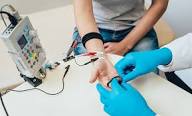
EMG does not use imaging scanners like CT or MRI. Instead, it uses specialized EMG machines designed to record electrical activity of nerves and muscles.
Types of equipment used in EMG include:
EMG Machine (Electromyograph)
- Records and displays electrical signals from muscles
- Uses needle electrodes or surface electrodes
Nerve Conduction Study (NCS) Equipment
- Delivers mild electrical impulses to nerves
- Measures nerve signal speed and strength
Surface Electrodes
Placed on the skin to record nerve or muscle activity
Needle Electrodes
Thin, sterile needles inserted into muscles for detailed recording
What happens before an EMG (Electromyography)?
Before an EMG test, a few simple steps are followed to make the procedure safe and accurate:
Medical history is reviewed
The doctor asks about your symptoms, medicines, and any nerve or muscle problems.
Medication details are checked
You should inform the doctor if you take blood thinners, have a pacemaker, or a bleeding disorder.
No fasting is needed
You can eat and drink normally before the test.
Skin preparation
You are advised not to apply oils, creams, or lotions on the skin on the day of the test.
Comfortable clothing
Wear loose, comfortable clothes or you may be asked to change into a hospital gown.
Explanation and consent
The procedure is explained, and your consent is taken.
What Happens During an EMG (Electromyography)?
During an EMG test, the doctor checks how well your muscles and nerves are working. Here’s what usually happens:
You are made comfortable
You will sit or lie down in a relaxed position.
Skin is cleaned
The area to be tested is cleaned to ensure accurte readings.
Electrodes are placed
- Small surface electrodes may be placed on the skin, or
- Very thin needle electrodes may be gently inserted into the muscle.
Muscle activity is recorded
You may be asked to relax the muscle and then gently move or tighten it.
Nerve testing (if done)
Mild electrical pulses may be given to test nerve signals. This may feel like a brief tingling sensation.
Signals are recorded and analyzed
The electrical activity of muscles and nerves is displayed on a screen for analysis.
How Long Does an EMG (Electromyography) Take?
An EMG test usually takes about 30 to 60 minutes to complete.
- Simple or limited testing: around 20–30 minutes
- Detailed testing of multiple nerves and muscles: up to 60 minutes.
What Happens After an EMG (Electromyography)?
After an EMG test, most patients can return to normal activities right away. Here’s what to expect:
Immediate recovery
No rest or hospital stay is usually needed.
Mild soreness
You may feel slight muscle soreness or tenderness at needle sites, which settles within a few hours or a day.
Normal activities
You can eat, walk, work, and take regular medicines as advised.
Care of needle sites
Small needle marks heal on their own. Rarely, mild bruising may occur.
Results explanation
The doctor will analyze the recordings and explain the results, or send a report to your referring doctor.
What are the risks of an EMG (Electromyography)?
An EMG is a very safe test, and serious problems are rare. Possible risks include:
- Mild pain or discomfort during needle insertion
- Temporary muscle soreness after the test
- Small bruises or bleeding at the needle site
- Rare infection at the needle insertion area
- Very rarely, injury to nearby structures (extremely uncommon)
What are the benefits of an EMG (Electromyography)?
An EMG (Electromyography) offers many important benefits, including:
- Accurate diagnosis of nerve and muscle problems
- Helps identify whether symptoms are due to nerve damage or muscle disease
- Pinpoints the exact location of nerve injury or compression
- Detects problems early, even before severe symptoms appear
- Helps doctors plan the right treatment
- Guides physiotherapy and rehabilitation
- Avoids unnecessary tests or treatments
A note from North City Diagnostic
The uncertainty of not knowing what’s causing your muscle weakness, pain, numbness, or tingling can make you feel anxious. An EMG (Electromyography) can provide the clarity and answers you need. This safe and commonly performed test helps your healthcare provider evaluate how well your nerves and muscles are working by measuring their electrical activity.
EMG helps detect conditions such as nerve damage, pinched nerves, peripheral neuropathy, muscle disorders, neuromuscular junction problems, and motor neuron diseases. It also helps determine whether your symptoms are coming from the nerve, the muscle, or the connection between them.
During the test, your doctor may examine multiple nerves and muscles and, if required, perform nerve conduction studies along with EMG—all in a single visit. The results help your provider make an accurate diagnosis and plan the most effective treatment.
Your doctor will explain the findings clearly and discuss the next steps based on your results.SS
Care at North City Diagnostic
If you have concerns about nerve or muscle health, you need a team of experts you can trust. At North City Diagnostic, our Neurologists and trained specialists provide advanced EMG and nerve conduction testing using modern equipment, precise techniques, and compassionate care—guiding you confidently at every step of your diagnosis and treatment journey